With the digital shift toward smart buildings, IoT-based monitoring is now core infrastructure for operations that depend on refrigeration. In commercial and industrial facilities, cooling isn't just about temperature — it's about product quality, operational continuity, equipment protection and energy cost. That matters even more in Saudi Arabia, where high ambient temperatures put extra load on cold warehouses, freezer rooms, food distribution centres, factories, healthcare facilities and large buildings on central refrigeration.مع التحوّل الرقمي نحو المباني والمنشآت الذكية، أصبحت أنظمة المراقبة الذكية باستخدام إنترنت الأشياء (IoT) بنية تحتية أساسية للعمليات التي تعتمد على التبريد. ففي المنشآت التجارية والصناعية، لا يقتصر دور التبريد على توفير درجات الحرارة — بل يمتدّ إلى جودة المنتج واستمرارية التشغيل وحماية المعدّات وتكلفة الطاقة. وتزداد هذه الأهمية في المملكة العربية السعودية حيث يرفع الطقس الخارجي الأحمال الحرارية على المستودعات المبرّدة وغرف التجميد ومراكز توزيع الأغذية والمصانع والمنشآت الطبية والمباني الكبرى.
The Smart Monitoring System turns operational data into actionable information: what's happening right now, when the deviation started, and what action to take.يحوّل نظام المراقبة الذكية بيانات التشغيل إلى معلومات عملية: ما الذي يحدث الآن، ومتى بدأ الانحراف، وما الإجراء الذي يجب اتخاذه.
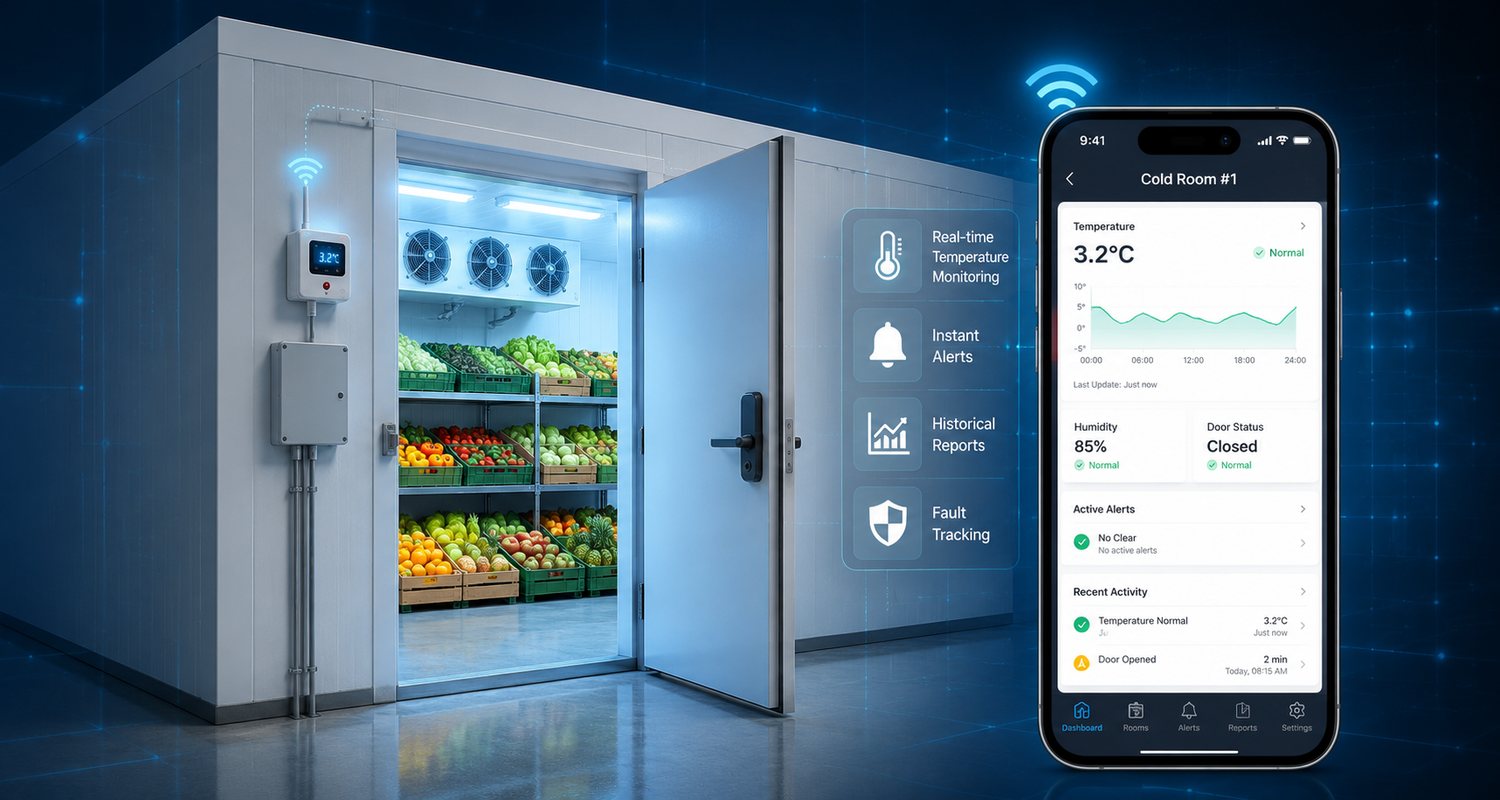
What Is a Smart Monitoring & IoT System?ما هو نظام المراقبة الذكية وإنترنت الأشياء؟
IoT (Internet of Things) lets devices, equipment and sensors connect and share data across networks — so operating conditions are monitored, analyzed and used to improve performance. Applied to refrigeration & HVAC, equipment is linked to sensors and controllers that measure the critical variables, then stream data to a central dashboard reachable from a PC or mobile app.إنترنت الأشياء (IoT) يسمح للأجهزة والمعدّات وأجهزة الاستشعار بالاتصال وتبادل البيانات عبر الشبكات لمراقبة الظروف التشغيلية وتحليلها وتحسين الأداء. وعند تطبيقها على التبريد والتكييف، تُربط المعدّات بأجهزة استشعار ووحدات تحكّم تقيس المتغيّرات المهمّة، ثم تنقل البيانات إلى منصّة مراقبة مركزية يمكن الوصول إليها من الكمبيوتر أو تطبيق الجوّال.
Instead of waiting for a problem to surface — or discovering it during a routine visit — the facility manager sees the system state in real time and gets early signals that enable timely action.بدلًا من انتظار ظهور المشكلة أو اكتشافها أثناء الزيارة الميدانية، يرى مدير المنشأة حالة النظام لحظيًا ويحصل على مؤشرات مبكّرة تمكّنه من التصرّف في الوقت المناسب.
How the System Worksكيف يعمل النظام
1. Sensors1. أجهزة الاستشعار
The starting point. Sensors measure the critical operating variables:نقطة البداية. تقيس أجهزة الاستشعار المتغيّرات التشغيلية الحرجة:
- Air temperature inside cold & freezer rooms.درجة حرارة الهواء داخل غرف التبريد والتجميد.
- Product temperature or dedicated monitoring points.درجة حرارة المنتجات أو نقاط القياس المخصّصة.
- Suction/discharge air temperatures on refrigeration units.درجات حرارة هواء السحب والطرد في وحدات التبريد.
- Suction & discharge pressures (where instrumented).ضغط السحب والطرد عند توافر أجهزة القياس.
- Run states of compressors, fans and pumps.حالة تشغيل الضواغط والمراوح والمضخات.
- Energy consumption and electrical current.استهلاك الطاقة والتيار الكهربائي.
- Door status — open duration monitoring.حالة الأبواب ومدة فتحها.
- Humidity & any site-specific variables.الرطوبة ومتغيّرات أخرى حسب المنشأة.
2. Data Collection & Control Unit (IoT Gateway)2. وحدة جمع البيانات والتحكّم (IoT Gateway)
Receives sensor data and ships it to the monitoring platform over Ethernet, Wi-Fi, cellular or industrial protocols. Can connect directly to the equipment's control system — or run alongside it to add monitoring capability to existing assets. Important distinction: smart monitoring (reading data + sending alerts) is not the same as actual equipment control (executing commands) — the latter requires the system to be designed and equipped for it.تستقبل البيانات من أجهزة الاستشعار وتنقلها إلى منصّة المراقبة عبر Ethernet أو Wi-Fi أو الشبكات الخلوية أو بروتوكولات الاتصال الصناعية. وقد تتصل مباشرة بنظام التحكم في المعدّات، أو تعمل بصورة مستقلة لإضافة قدرات المراقبة إلى الأنظمة القائمة. تمييز مهم: المراقبة الذكية (قراءة البيانات وإرسال التنبيهات) تختلف عن التحكّم الفعلي في المعدّات (تنفيذ أوامر) — فالثاني يحتاج إلى تصميم وتجهيز خاص.
3. Monitoring & Analytics Dashboard3. منصّة المراقبة والتحليل
A digital control panel that lets the operator track equipment state from one place:لوحة تحكّم رقمية تسمح للمستخدم بمتابعة حالة المعدّات من موقع واحد:
- Current & historical temperatures.درجات الحرارة الحالية والتاريخية.
- Equipment run/stop state.حالات التشغيل والتوقف.
- Trend charts for temperature & pressure.رسوم بيانية لتغيّر الحرارة والضغوط.
- Alert & fault log.سجل التنبيهات والأعطال.
- Energy consumption indicators.مؤشرات استهلاك الطاقة.
- Operation & maintenance reports.تقارير التشغيل والصيانة.
- Equipment performance comparison across periods.مقارنة أداء المعدّات على فترات زمنية مختلفة.
4. Smart Alerts4. التنبيهات الذكية
When a reading exceeds allowed limits — or an abnormal condition is detected — the system pushes an alert to the responsible team via mobile app, email or SMS. Example: freezer temperature exceeds the alarm threshold for a defined duration → alert includes the room name, current reading and timestamp. Result: faster response, shorter time with an undetected problem.عند تجاوز إحدى القراءات الحدود المسموح بها أو ظهور حالة غير طبيعية، يرسل النظام تنبيهًا للمسؤولين عبر التطبيق أو البريد الإلكتروني أو الرسائل النصية. مثال: ارتفاع حرارة غرفة التجميد عن الحد المحدد لمدة معيّنة → تنبيه يتضمن اسم الغرفة والقراءة الحالية ووقت بداية التجاوز. والنتيجة: استجابة أسرع وتقليل الوقت الذي تستمرّ فيه المشكلة دون اكتشاف.
5. Data Analysis & Fault Prediction5. تحليل البيانات والتنبّؤ بالأعطال
Advanced systems analyze historical data to spot abnormal performance changes — gradual temperature creep, rising energy consumption, frequent on/off cycling. Some use analytics or AI techniques to identify patterns pointing to a likely issue. Note: predictive detection isn't guaranteed in every system — accuracy depends on sensor quality, data availability, fault type and the analytics in use.تستطيع الأنظمة المتقدّمة تحليل البيانات التاريخية للكشف عن التغيّرات غير المعتادة — ارتفاع تدريجي في الحرارة، أو زيادة استهلاك الطاقة، أو تكرار الفصل والتشغيل. وقد تستخدم بعض الحلول خوارزميات تحليل متقدّمة أو الذكاء الاصطناعي لتحديد الأنماط التي تشير إلى مشكلة محتملة. ملاحظة: اكتشاف الأعطال قبل وقوعها ليس مضمونًا في جميع الأنظمة؛ فالدقّة تعتمد على جودة القياس وتوافر البيانات ونوع العطل وقدرات التحليل.
Smart Monitoring in Cold & Freezer Roomsالمراقبة الذكية في غرف التبريد والتجميد
Cold & freezer rooms are among the most important applications — any undetected temperature rise can degrade product or shorten shelf life, causing significant losses.تُعدّ غرف التبريد والتجميد من أهم التطبيقات؛ فأيّ ارتفاع غير مرغوب في الحرارة قد يُدهور المنتج أو يُقلّل مدة الصلاحية ويسبّب خسائر كبيرة.
- 24/7 temperature monitoringمراقبة الحرارة على مدار الساعة — continuous logging with current and historical readings; separate alarm thresholds per cold/freezer room and product.تسجيل مستمر مع قراءات حالية وتاريخية وحدود إنذار مختلفة لغرف التبريد والتجميد.
- Early detection of temperature deviationsاكتشاف ارتفاع الحرارة مبكّرًا — immediate alert — or after a defined deviation period — pointing to the room, reading and timestamp.تنبيه فوري أو بعد مدة تجاوز محدّدة يتضمّن اسم الغرفة والقراءة والوقت.
- Refrigeration unit performance trackingمراقبة أداء وحدات التبريد — compressor, fan, condenser and evaporator state — spot stopped units or unusual short-cycling.متابعة الضواغط والمراوح والمكثفات والمبخرات — واكتشاف الوحدات المتوقفة أو التشغيل والتوقف المتكرّر.
- Door monitoringمراقبة الأبواب — log open/close times, alert when a door stays open too long — reducing warm-air ingress and ice formation.تسجيل أوقات الفتح والإغلاق، وتنبيه عند بقاء الباب مفتوحًا طويلًا — لتقليل دخول الهواء الدافئ وتكوّن الثلج.
- Defrost cycle monitoringمراقبة دورات إذابة الثلج — cycle duration, frequency and associated temperatures — catch abnormal cycles pointing to termination sensors, heaters or airflow.تسجيل مدة الدورات وتكرارها ودرجات الحرارة المرتبطة — واكتشاف الدورات غير الطبيعية.
- Historical temperature logسجل الحرارة التاريخي — critical for fault analysis, operations improvement, and food-safety / quality compliance.معلومات حيوية لتحليل الأعطال وتحسين إجراءات التشغيل ودعم أنظمة الجودة وسلامة الأغذية.
Monitoring Central Cooling for Critical Facilitiesالمراقبة الذكية لوحدات التبريد المركزية الحساسة
Smart monitoring also serves central refrigeration in hospitals, data centres, manufacturing plants, pharma facilities and large commercial buildings that demand high operational continuity. Here problems rarely start with a temperature spike — they often begin as a small pressure change, energy creep, or repeated alarms, before escalating to shutdown.لا تقتصر أهمية المراقبة الذكية على غرف التبريد؛ بل تمتدّ إلى وحدات التبريد المركزية في المستشفيات ومراكز البيانات والمصانع والمنشآت الدوائية والمباني الكبرى التي تتطلب استمرارية عالية. وفي هذه التطبيقات، لا تبدأ المشكلة عادةً بارتفاع الحرارة، بل بتغيّر طفيف في ضغط التشغيل أو زيادة الطاقة أو تكرار الإنذارات قبل أن تتطوّر إلى توقّف.
Chiller monitoringمراقبة الشيلرات
Supported variables depend on the chiller's instrumentation & controls — chilled water in/out temperatures, refrigeration circuit pressure, suction/discharge temps, compressor states, water flow (where instrumented), condenser & evaporator temps, power consumption, and fault codes from the control panel. This feeds performance assessment and surfaces abnormal changes signalling needed maintenance.المتغيّرات المدعومة تعتمد على تجهيزات الجهاز ونظام التحكّم — درجات حرارة مياه الدخول والخروج، وضغط دائرة التبريد، ودرجات حرارة السحب والطرد، وحالة الضواغط، وتدفّق المياه، ودرجات حرارة المكثف والمبخّر، واستهلاك الطاقة، ورموز الأعطال.
AHU & terminal unit monitoringمراقبة وحدات مناولة الهواء (AHU) والوحدات الطرفية
Supply/return air temperatures, fan state, filter differential pressure, chilled water valve state. A rising filter ΔP signals possible blockage; failure to reach the setpoint signals a need to check airflow, water valve, sensors or thermal load. Monitoring moves inspection timing from fixed schedules → actual condition indicators. Fan Coil Units can also be monitored when equipped with suitable measurement & communication points.يمكن مراقبة درجات حرارة هواء الدخول والخروج وحالة المراوح وفرق الضغط عبر الفلاتر وحالة صمامات المياه المبرّدة. ارتفاع فرق الضغط عبر الفلتر → احتمال انسداد؛ عدم وصول درجة حرارة الهواء إلى القيمة المطلوبة → حاجة لفحص تدفّق الهواء أو الصمام أو الحساسات أو الحمل الحراري.
Continuity support for critical facilitiesدعم استمرارية التشغيل في المنشآت الحسّاسة
In hospitals, factories and critical operations, the system can monitor primary & standby units — alerting when one stops or performance drops. This can support load transfer to standby equipment when the auto-transfer function is designed and tested in the control system itself. Important: smart monitoring does not replace local protection & control systems, and internet connectivity should never be a prerequisite for the equipment's basic safety functions.في المستشفيات والمصانع يمكن تصميم النظام لمراقبة الوحدات الرئيسية والاحتياطية وإصدار تنبيهات عند توقف وحدة أو انخفاض الأداء. ويمكن أن يدعم ذلك إجراءات تحويل الأحمال للمعدات الاحتياطية بشرط أن تكون خاصية التحويل التلقائي مصمّمة ومختبرة ضمن نظام التحكّم نفسه. مهم: لا تُغني المراقبة الذكية عن أنظمة الحماية والتحكّم المحلية، ولا يجب أن يكون الاتصال بالإنترنت شرطًا لاستمرار وظائف السلامة الأساسية.
What Faults Can IoT Monitoring Detect or Predict?ما الأعطال التي يمكن للنظام اكتشافها أو المساعدة في توقّعها؟
Detection capability varies by instrumentation and analytics. Common cases:قدرات الاكتشاف تختلف حسب التجهيزات والتحليلات. الحالات الشائعة:
| Fault / Conditionالعطل أو الحالة | Monitored Indicatorالمؤشر المراقَب | Operational Valueالفائدة التشغيلية |
|---|---|---|
| Room temperature riseارتفاع حرارة الغرفة | Temperature sensor readingsقراءات حسّاس الحرارة | Alert before the problem persistsتنبيه قبل استمرار المشكلة |
| Compressor stoppedتوقف الضاغط | Run state & fault codesحالة التشغيل ورموز الأعطال | Identify stopped unit quicklyتحديد الوحدة المتوقفة بسرعة |
| Discharge pressure highارتفاع ضغط الطرد | Pressure readings & alarmsقراءات الضغط والإنذارات | Fast condenser & operating-condition checkفحص سريع للمكثف وظروف التشغيل |
| Suction pressure lowانخفاض ضغط السحب | Pressure & temperatureالضغط ودرجات الحرارة | Supports refrigerant circuit & load checkدعم فحص دائرة التبريد والحمل |
| Weak coolingضعف التبريد | Temps + equipment performanceالحرارة وأداء المعدات | Determine when to start inspectionالمساعدة في تحديد وقت الفحص |
| Filter blockageانسداد الفلاتر | Differential pressure across filterفرق الضغط عبر الفلتر | Flag need to clean / replaceتحديد الحاجة للتنظيف أو الاستبدال |
| Compressor short-cyclingتكرار تشغيل الضاغط وتوقفه | Run/stop logسجل حالات التشغيل والتوقف | Catch abnormal operating patternاكتشاف نمط تشغيل غير طبيعي |
| Door open too longباب الغرفة مفتوح طويلًا | Door sensor + time logحسّاس الباب وسجل الوقت | Cut unnecessary thermal loadتقليل الأحمال الحرارية غير الضرورية |
| Energy consumption spikeارتفاع استهلاك الطاقة | Power meter + run dataعدّادات الكهرباء وبيانات التشغيل | Detect & review performance changesاكتشاف ومراجعة تغيرات الأداء |
| Central-unit failureتعطّل وحدة في النظام المركزي | Unit status & alarmsحالة الوحدة والإنذارات | Improve maintenance response speedتحسين سرعة استجابة الصيانة |
A key distinction: detecting a fault, identifying its cause, and predicting it are not the same. Detecting a temperature rise is immediate with a sensor; identifying whether it's low refrigerant, poor airflow or a compressor fault needs more data and technical inspection. Predicting a future failure needs reliable data and the right analytics — and isn't possible for every fault type.تمييز مهم: اكتشاف العطل وتحديد سببه والتنبّؤ به ثلاثة أمور مختلفة. اكتشاف ارتفاع الحرارة فوري عند توافر الحسّاس المناسب، بينما تحديد السبب (نقص وسيط التبريد أو ضعف تدفّق الهواء أو عطل في الضاغط) يحتاج بيانات إضافية وفحصًا فنيًا. أمّا التنبّؤ بعطل مستقبلي، فيتطلّب بيانات موثوقة وتحليلًا مناسبًا، وقد لا يكون ممكنًا لكل أنواع الأعطال.
Business Benefitsالفوائد التشغيلية والتجارية
- Fewer product losses.تقليل خسائر المنتجات. Early alerts shorten detection time → smaller impact window.التنبيهات المبكّرة تقلّل زمن اكتشاف المشكلة → تقليل الأثر.
- Faster fault response.تقليل زمن الاستجابة. The responsible person knows about the issue before someone calls.المسؤول يعرف بالمشكلة قبل أن تصل بلاغات العاملين.
- Smarter maintenance.صيانة أكثر ذكاءً. Shift from pure schedule-based maintenance → condition-informed maintenance. Doesn't replace preventive — enhances it.الانتقال من الصيانة الدورية بالكامل → صيانة مبنيّة على الحالة الفعلية. لا تلغي الصيانة الوقائية بل تطوّرها.
- Energy savings — when actioned.تقليل استهلاك الطاقة عند معالجة الأسباب. Analytics expose inefficient operation. Impact varies by site and operation.التحليل يكشف ظروف التشغيل غير الكفؤة. حجم التوفير يختلف حسب حالة النظام والتشغيل.
- Asset protection & longer equipment life.حماية الأصول وإطالة عمر المعدات. Catch abnormal operating conditions before they wear equipment.اكتشاف ظروف التشغيل غير الطبيعية مبكرًا.
- Better management decisions.قرارات إدارية أفضل. Documented data on run hours, fault frequency, consumption and downtime.بيانات موثقة عن ساعات التشغيل وتكرار الأعطال والاستهلاك والتوقف.
- Multi-site visibility.متابعة عدّة مواقع من مكان واحد. One central platform for all warehouses, branches and facilities.منصّة مركزية لمتابعة كل المستودعات والفروع والمنشآت.
- Better customer serviceتحسين جودة الخدمة — for operation & service companies: data-driven reports, not just reactive callouts.لشركات التشغيل والصيانة: تقارير مبنيّة على البيانات بدلاً من الاستجابة فقط للبلاغات.
Traditional Maintenance vs Smart Monitoringالفرق بين الصيانة التقليدية والمراقبة الذكية
| Aspectوجه المقارنة | Traditional Maintenanceالصيانة التقليدية | Smart Monitoringالمراقبة الذكية |
|---|---|---|
| Equipment status trackingمتابعة حالة المعدّات | Scheduled visits & inspectionsزيارات وفحوصات مجدولة | Live data & alertsبيانات لحظية وتنبيهات |
| Temperature deviation detectionاكتشاف ارتفاع الحرارة | On inspection or calloutعند الفحص أو وصول بلاغ | Via sensors in real timeعبر الحسّاسات لحظيًا |
| Fault logسجل الأعطال | Manual recordsتوثيق يدوي | Electronic log on the platformسجل إلكتروني على المنصة |
| Performance analysisتحليل الأداء | Depends on captured readingsيعتمد على القياسات المتاحة | Current + historical dataبيانات حالية وتاريخية |
| Multi-site trackingمتابعة عدّة مواقع | Requires coordination & site visitsيحتاج تنسيق وزيارات | Central platform aggregationمنصة مركزية موحّدة |
| Fault predictionالتنبّؤ بالأعطال | Limited without continuous dataمحدود دون بيانات مستمرّة | Possible for some cases with analyticsممكن لبعض الحالات مع التحليلات المناسبة |
Best outcome in most facilities: combine preventive maintenance with smart monitoring — the data supports the maintenance team's decisions without replacing their technical expertise or field inspection.الحل الأفضل في معظم المنشآت: الجمع بين الصيانة الوقائية والمراقبة الذكية — بحيث تدعم البيانات قرارات فريق الصيانة ولا تحلّ محلّ الخبرة الفنية والفحص الميداني.
How to Choose the Right Smart Monitoring Systemكيف تختار النظام المناسب لمنشأتك؟
- System typeنوع النظام — cold rooms? chillers? central HVAC? all of them?غرف تبريد؟ شيلرات؟ تكييف مركزي؟ جميعها؟
- Measurement pointsنقاط القياس — which variables are critical to monitor?ما المتغيّرات التي يجب مراقبتها؟
- Alert speedسرعة التنبيهات — instant alerts, periodic reports, or both?تنبيهات فورية، تقارير دورية، أم كليهما؟
- Communication & integrationالاتصال والتكامل — does it connect to existing control units & protocols?هل يتصل بوحدات التحكّم الحالية والبروتوكولات المتوفّرة؟
- Data retentionالاحتفاظ بالبيانات — how long are records stored? exportable historical reports?ما مدة التخزين؟ هل يمكن استخراج تقارير تاريخية؟
- Multi-user & multi-siteتعدّد المستخدمين والمواقع — role-based access and multiple facility support?صلاحيات مختلفة ودعم منشآت متعدّدة؟
- Cybersecurityالأمن السيبراني — authentication, role control, security updates, encrypted communication.المصادقة، تحديد الصلاحيات، تحديثات الأمان، والاتصالات المحمية.
- Continuityاستمرارية التشغيل — what happens if the internet drops? do local protection systems keep working?ماذا يحدث إذا انقطع الإنترنت؟ هل تستمر أنظمة التحكّم والحماية المحلية؟
- Scalabilityقابلية التوسع — can you add sensors, rooms and units as the business grows?هل يمكن إضافة حساسات وغرف ووحدات جديدة؟
- Technical supportالدعم الفني — a capable team to install, calibrate, test and maintain the system.فريق قادر على التركيب والمعايرة والاختبار والصيانة.
The right system starts from defining the risks you want to reduce and the data you need to make decisions — not from buying the largest number of sensors.يبدأ اختيار النظام الصحيح من تحديد المخاطر التي تريد الحدّ منها والبيانات المطلوبة لاتخاذ القرارات — وليس من شراء أكبر عدد من الحسّاسات.
Why ATMIID for Smart Monitoring & Refrigeration?لماذا شركة اعتمد المحدودة لحلول المراقبة الذكية والتبريد؟
We believe refrigeration success doesn't depend on equipment quality alone — it also depends on operational efficiency, how fast problems are detected, and long-term performance management. Smart monitoring is an engineered extension of our solutions — helping facilities track their refrigeration systems and manage faults in a far more organized way.نؤمن بأن نجاح أنظمة التبريد لا يعتمد فقط على جودة المعدات، بل على كفاءة التشغيل، وسرعة اكتشاف المشكلات، والمحافظة على الأداء على المدى الطويل. وتمثّل حلول المراقبة الذكية امتدادًا هندسيًا لحلولنا لمساعدة المنشآت على متابعة أنظمة التبريد وإدارة الأعطال بصورة أكثر تنظيمًا.
- Cold & freezer roomsغرف التبريد والتجميد — temperature & run-state monitoring per project requirements.حلول مراقبة الحرارة وحالات التشغيل حسب متطلبات المشروع.
- Central refrigerationوحدات التبريد المركزية — performance & alarm tracking on monitoring-ready systems.متابعة مؤشرات الأداء والإنذارات في الأنظمة المتوافقة.
- Chillers & central HVACالشيلرات والتكييف المركزي — tracking available measurement points & run states.مراقبة نقاط القياس المتاحة وحالات التشغيل.
- Smart alertingأنظمة التنبيه الذكية — configurable alarm thresholds & notifications for fast response.حدود إنذار وإشعارات قابلة للتهيئة.
- Integration with existing systemsالتكامل مع الأنظمة القائمة — connect monitoring to existing controls without disturbing core protection functions.دراسة ربط المراقبة بوحدات التحكّم الحالية دون التأثير في وظائف الحماية.
- Technical support & maintenanceالدعم الفني والصيانة — operational-issue follow-up and maintenance process improvement.متابعة المشكلات التشغيلية وتحسين إجراءات الصيانة.
Move from reactive repair to proactive, data-driven operationsانتقل من إدارة الأعطال بعد وقوعها إلى تشغيل استباقي مبني على البيانات
Our engineers design a smart monitoring plan sized to your equipment, risks and sites — one accountable partner for refrigeration + monitoring + ongoing support.يُصمّم فريقنا الهندسي خطة مراقبة ذكية تناسب معدّاتك ومخاطرك ومواقعك — شريك واحد مسؤول عن التبريد والمراقبة والدعم المستمر.